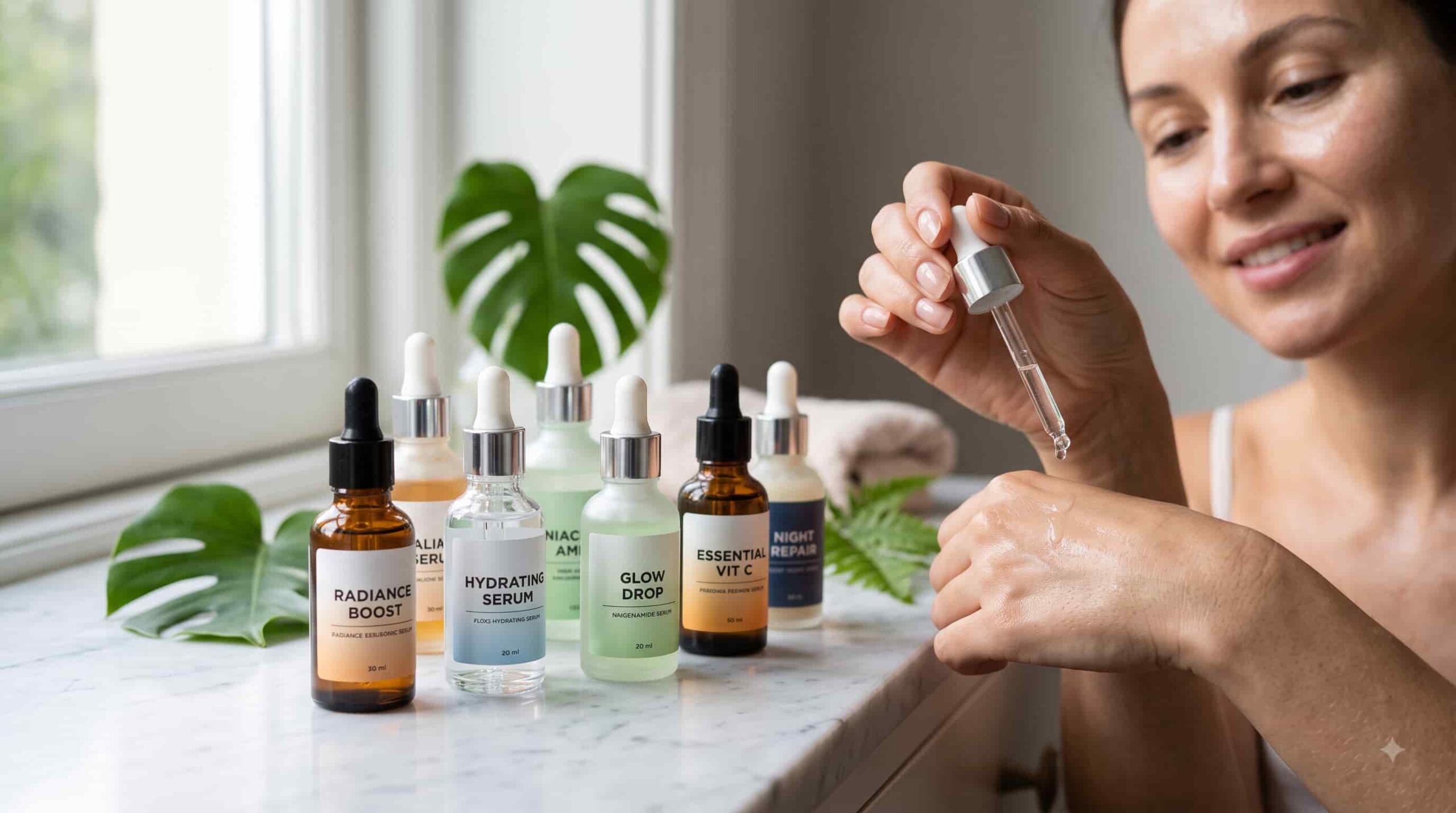
If your skin looks dull, tired, or uneven, adding the right serum to your skincare routine can help improve its overall appearance. Unlike a heavy cream, a serum is usually lightweight and designed to deliver specific active ingredients to the skin.
But with so many products promising instant “glass skin” or a natural glow, choosing the right serum can be confusing. The best option depends on your skin type, concerns, and the ingredients in the formula.
What Is a Face Serum?
A face serum is a lightweight skincare product formulated with concentrated ingredients that target particular concerns such as dullness, uneven skin tone, dehydration, pigmentation, or signs of aging.
Rather than looking for one magical product that works for everyone, choose a serum according to your primary skin concern. Dermatologists also recommend keeping skincare routines focused instead of applying numerous active products at once, since excessive use of actives can irritate the skin.
How Does a Serum Help Give Glowing Skin?
Healthy-looking “glow” generally comes from well-hydrated, smooth and even-looking skin. A suitable serum can support this appearance in several ways:
- Hydration: Ingredients such as hyaluronic acid help the skin retain moisture.
- Brightening: Vitamin C can help improve the appearance of dark spots and uneven tone.
- Barrier support: Niacinamide can help support the skin barrier while addressing concerns such as excess oil and uneven tone.
- Texture improvement: Certain ingredients can help make rough or uneven-looking skin appear smoother.
- Antioxidant support: Vitamin C provides antioxidant benefits that can help protect skin from environmental stressors.
The result is not necessarily an overnight transformation. Consistent skincare, adequate moisturization, and daily sun protection are important for maintaining healthy-looking skin.
Best Serum Ingredients for Glowing Skin
Vitamin C Serum – Best for Dullness and Uneven Tone
Vitamin C is one of the most popular ingredients for a brighter-looking complexion. It has antioxidant properties and can help improve the appearance of dark spots and signs of sun-related skin damage.
The American Academy of Dermatology notes that vitamin C can help reduce signs of skin aging and dark spots and recommends applying it after cleansing in the morning, before sunscreen.
Best suited for: Dull skin, uneven tone and visible dark spots.
Niacinamide Serum – Best for Combination and Oily Skin
Niacinamide, also known as vitamin B3, is a versatile skincare ingredient. It is commonly used to support the skin barrier, reduce the appearance of excess oil, and improve uneven-looking skin.
It can be a particularly useful choice if you want a serum that combines brightening and skin-balancing benefits.
Best suited for: Oily, combination, uneven or blemish-prone skin.
Hyaluronic Acid Serum – Best for Dry and Dehydrated Skin
If your skin looks dull because it feels dry or tight, hydration may be the first thing to address. Hyaluronic acid is a humectant that helps attract and retain water, giving skin a smoother and more plump-looking appearance.
For best results, apply a hydrating serum to slightly damp skin and follow with moisturizer to help retain hydration.
Best suited for: Dry, dehydrated or tight-feeling skin.
Retinol Serum – Best for Texture and Signs of Aging
Retinol belongs to the retinoid family and can help address concerns including fine lines, uneven texture, acne and dark spots. Because retinoids can cause irritation, beginners should introduce them gradually rather than immediately using them every night.
Best suited for: Uneven texture, fine lines and signs of aging.
Best Serum for Different Skin Types
| Skin Type | Serum Ingredient to Consider | Main Benefit |
|---|---|---|
| Dry skin | Hyaluronic acid | Hydration |
| Oily skin | Niacinamide | Oil and barrier support |
| Combination skin | Niacinamide | Balance and uneven tone |
| Dull skin | Vitamin C | Brightening |
| Uneven skin tone | Vitamin C or niacinamide | More even-looking complexion |
| Mature skin | Retinol or vitamin C | Texture and signs of aging |
| Sensitive skin | Gentle hydrating serum | Moisture and barrier support |
Remember that skin can react differently to the same ingredient. Always consider the complete formulation rather than focusing only on the headline ingredient.
How to Choose the Right Serum
Before purchasing a serum, ask yourself three simple questions:
What is my main concern?
Choose one primary goal, such as hydration, dullness, pigmentation or texture.
What is my skin type?
Dry skin may benefit from hydrating formulations, while oily or combination skin may prefer lightweight products.
Is the formula too complicated for my routine?
More active ingredients do not automatically mean better results. Using too many powerful products can increase the chance of irritation.
If you have sensitive skin, introduce one new product at a time and consider a patch test before applying it extensively.
How to Use Face Serum Correctly
A serum works best when applied in the correct order.
Morning
- Cleanse your face with a gentle cleanser.
- Apply your chosen serum.
- Follow with moisturizer if needed.
- Finish with broad-spectrum sunscreen with SPF 30 or higher.
The AAD recommends broad-spectrum SPF 30+ sunscreen as part of daily skin protection.
Night
- Cleanse your face.
- Apply your serum.
- Follow with moisturizer.
If you’re using retinol, start slowly and avoid introducing several potentially irritating active ingredients at the same time.
Morning and Night Skincare Routine
A simple routine can be more useful than a complicated one.
AM:
Cleanser → Vitamin C or niacinamide serum → Moisturizer → Sunscreen
PM:
Cleanser → Hydrating, niacinamide or retinol serum → Moisturizer
You don’t necessarily need multiple serums. Selecting one product that addresses your biggest concern can make your routine easier to maintain.
Common Mistakes to Avoid
Using Too Many Serums
Layering several active serums does not guarantee faster results. It may instead increase irritation and sensitivity.
Skipping Sunscreen
A brightening serum cannot replace sun protection. Daily sunscreen is particularly important if you’re trying to improve the appearance of dark spots or uneven tone.
Expecting Instant Results
Skincare generally requires consistency. Give a new routine time to work rather than changing products every few days.
Choosing a Serum Only Because It Is Trending
A popular product may not be suitable for your skin. Look at the ingredients, formulation and your specific concern before making a decision.
Frequently Asked Questions
There is no single best serum for everyone. Vitamin C is a strong option for dullness and uneven tone, hyaluronic acid is useful for dehydration, and niacinamide is a versatile choice for oily or combination skin.
Many people use vitamin C in their morning routine, but tolerance depends on the formulation and individual skin. If you’re new to it, starting gradually can be a sensible approach.
Usually, no. A serum and moisturizer serve different purposes. A hydrating serum can add moisture, while moisturizer helps support the skin barrier and reduce water loss.
Yes. Sunscreen remains an important part of a daytime skincare routine. Dermatologists recommend broad-spectrum SPF 30 or higher.
You can, but you don’t have to. If you combine products, introduce them carefully and avoid creating an unnecessarily complicated routine. Too many active ingredients may irritate the skin.
Final Thoughts
The best serum for glowing skin is not necessarily the most expensive or most popular one. The right choice is the product that matches your skin type and addresses your main concern.
For dull or uneven-looking skin, consider vitamin C. For dehydrated skin, look for hyaluronic acid. For oily or combination skin, niacinamide can be a useful option. If your primary concern is fine lines or uneven texture, retinol may be worth considering.
Most importantly, keep your routine consistent, use moisturizer when needed, and protect your skin from the sun every day. A simple routine that suits your skin is often more sustainable than using a large number of products.
This article is original, rewritten from scratch, and does not intentionally reproduce wording from the referenced sources. Skincare advice is general information; if you have persistent irritation, severe acne, or pigmentation concerns, consult a qualified dermatologist.